
Keeping your home comfortable year-round does not have to mean accepting higher energy bills. With the right approach to heating, cooling, insulation, and daily habits, you can create a more consistent indoor environment while using energy more efficiently. One increasingly practical option is upgrading to energy-efficient heat pump systems, which can provide both heating and cooling from one system.
However, equipment is only part of the equation. Indoor comfort also depends on how well your home holds conditioned air, how efficiently your HVAC system operates, and how you manage temperature settings. A few thoughtful changes can make a noticeable difference without requiring major renovations.
Improve Indoor Comfort by Managing Airflow
Even a properly sized HVAC system can struggle to keep rooms comfortable when airflow is restricted. Closed vents, blocked registers, dirty filters, or poorly balanced ductwork can prevent conditioned air from reaching certain areas of the home.
Start by checking that supply vents and return grilles are unobstructed by furniture, curtains, rugs, or other household items. Replace or clean HVAC filters according to the manufacturer’s recommendations. A clogged filter makes the system work harder and can reduce overall airflow.
If some rooms consistently feel warmer or colder than others, consider having an HVAC professional inspect the ductwork and airflow balance. Uneven temperatures may indicate leakage, inadequate insulation, or an airflow problem rather than a thermostat issue.
Use Your Thermostat More Strategically
Constantly adjusting the thermostat can make it harder to maintain a comfortable indoor environment efficiently. Instead, choose reasonable temperature settings and avoid large temperature swings whenever possible.
A programmable or smart thermostat can help automatically adjust indoor temperatures around your daily routine. For example, you can use less heating or cooling while everyone is away and return to a comfortable setting before the household is active again.
Avoid setting the thermostat dramatically higher or lower than your desired temperature to make the system “work faster.” HVAC equipment generally does not heat or cool a home faster simply because you choose an extreme setting.
Seal Drafts and Strengthen Insulation
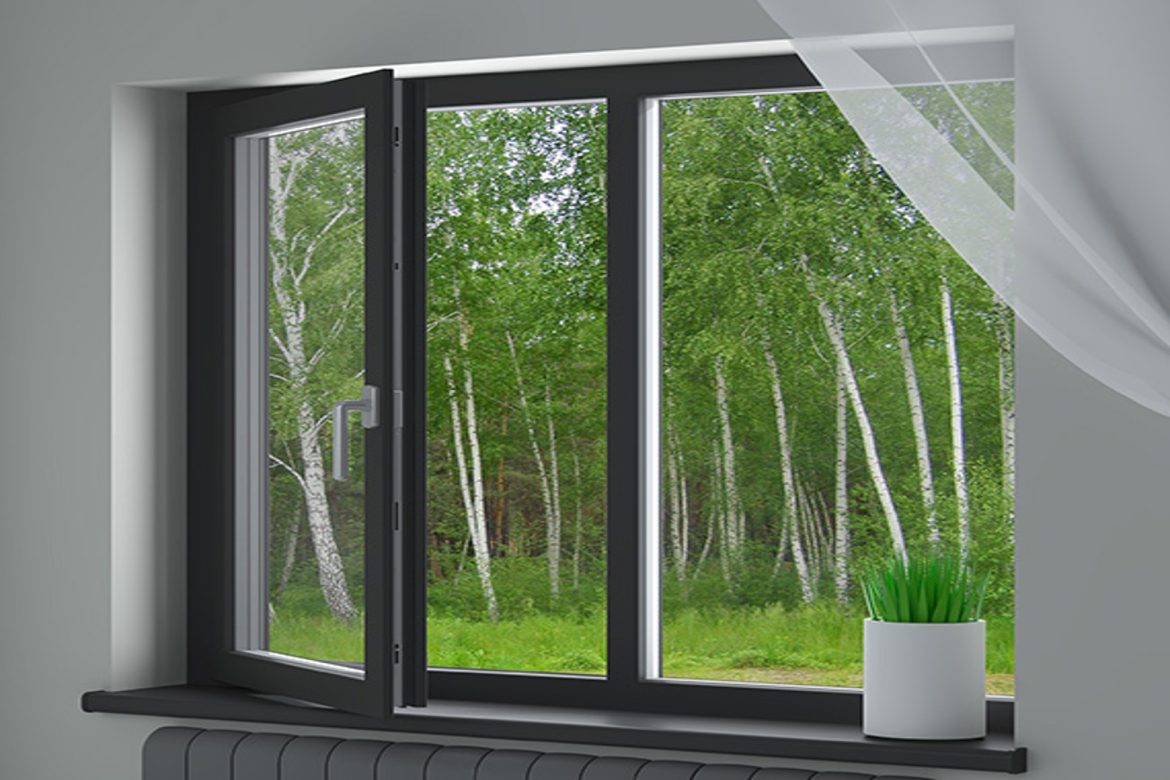
Your HVAC system cannot maintain comfort efficiently if conditioned air constantly escapes. Small gaps around doors, windows, plumbing penetrations, and other openings can allow outdoor air to enter and indoor air to escape.
Weatherstripping and caulk can address many common air leaks. Pay particular attention to exterior doors and windows, especially if you notice drafts or temperature differences near them.
Insulation is equally important. Attics, walls, floors, and ductwork all play a role in maintaining indoor temperatures. If certain rooms become noticeably hotter in summer or colder in winter, inadequate insulation may be contributing to the problem.
Choose Efficient Heating and Cooling Equipment
Older HVAC equipment may consume more energy than modern, properly maintained systems. If your heating or cooling system is approaching the end of its useful life, replacing it with an appropriately sized high-efficiency model can improve both comfort and energy performance.
Heat pumps are worth considering because they can provide heating and cooling using the same basic system. Instead of generating heat through combustion or electric resistance, a heat pump transfers heat between the home and outdoors.
The key is choosing equipment that fits the home’s needs. An oversized system may cycle on and off frequently, while an undersized unit may run for long periods without adequately conditioning the space. Professional load calculations can help determine the appropriate capacity.
Make Small Changes That Support HVAC Efficiency
You do not always need a major investment to improve comfort. Simple household practices can reduce unnecessary heating and cooling demands.
Consider these practical steps:
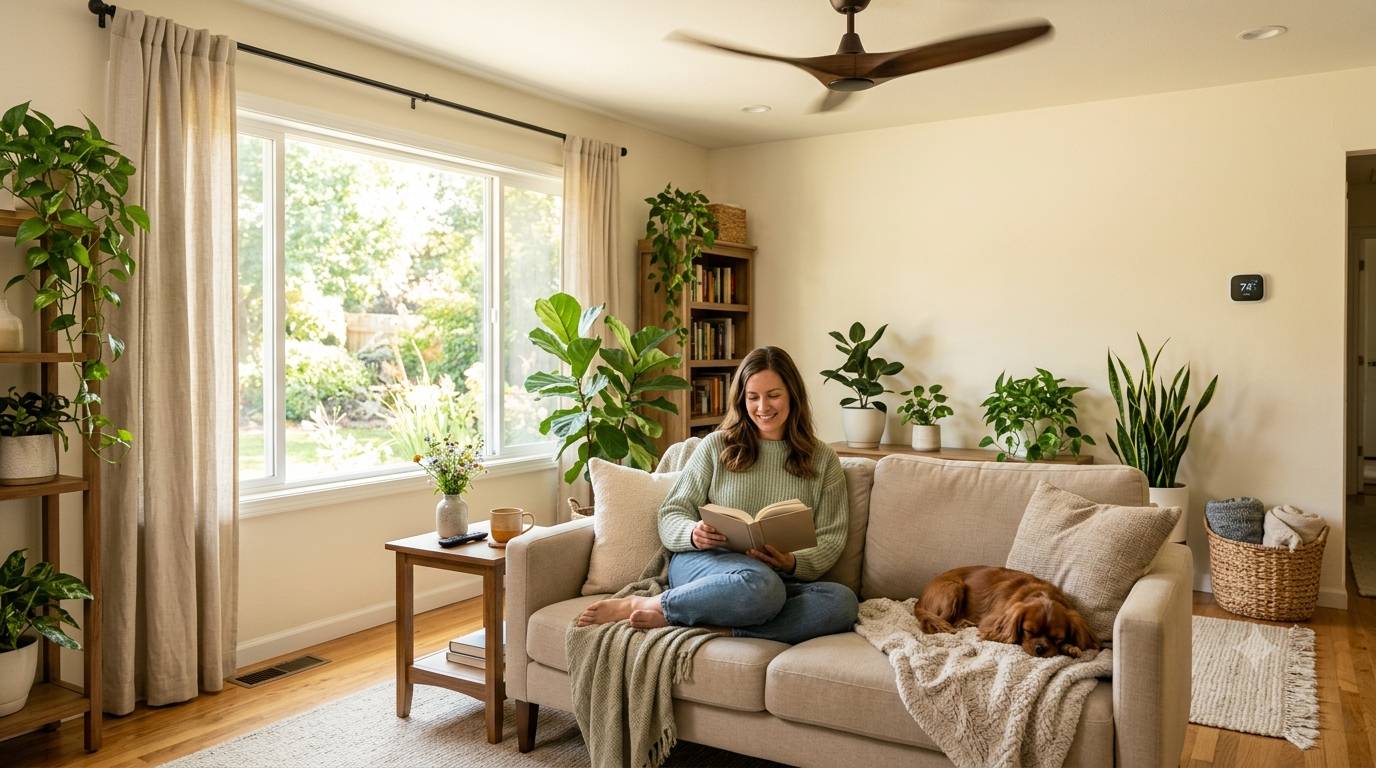
- Close blinds or curtains during periods of strong summer sunlight.
- Open them when winter sunlight can provide useful passive warmth.
- Use ceiling fans to improve perceived comfort without dramatically changing the thermostat setting.
- Keep exterior doors and windows closed while heating or cooling is running.
- Avoid blocking HVAC vents with furniture.
- Replace worn weatherstripping around exterior doors.
- Schedule professional HVAC maintenance as recommended for your equipment.
- Use kitchen and bathroom exhaust fans thoughtfully so conditioned air is not unnecessarily removed from the home.
These measures work best together. No single habit will solve every comfort problem, but several small improvements can reduce the workload placed on your HVAC system.
Schedule Preventive HVAC Maintenance
Regular maintenance helps keep heating and cooling equipment operating as intended. Over time, components can become dirty, worn, or improperly adjusted, which may affect system performance.
A professional inspection can identify issues involving electrical components, refrigerant systems, airflow, moving parts, and other equipment-specific concerns. Maintenance can also provide an opportunity to identify developing problems before they become more disruptive.
Homeowners should also pay attention to unusual noises, weak airflow, inconsistent temperatures, unexpected increases in energy use, or frequent cycling. These signs do not always indicate a serious problem, but they are worth investigating.
Avoid Common Energy-Wasting Mistakes
Some comfort strategies can unintentionally increase energy consumption. For example, relying heavily on portable heaters in individual rooms may seem convenient but can become inefficient when used extensively. Similarly, repeatedly lowering or raising the thermostat to extreme temperatures can increase system runtime.
Another common mistake is ignoring the building itself. Homeowners sometimes focus entirely on buying a more efficient HVAC unit when air leakage, poor insulation, or duct problems are contributing to comfort issues.
Think of the home as a complete system. Efficient equipment performs best when the building envelope, ductwork, controls, and ventilation are working together.
Know When an Upgrade Makes Sense
If your current system frequently needs repairs, struggles to maintain comfortable temperatures, or consumes more energy than expected, it may be time to compare replacement options. Look beyond the equipment’s upfront price and consider efficiency, expected operating costs, maintenance requirements, and compatibility with your home.
A qualified HVAC contractor can evaluate your existing system and identify whether maintenance, targeted repairs, or replacement makes the most sense. Ask about equipment sizing, efficiency ratings, installation practices, and expected maintenance so you can make an informed decision.
Conclusion
Improving indoor comfort without increasing energy bills starts with using your home’s HVAC system intelligently. Better airflow, sensible thermostat settings, adequate insulation, sealed air leaks, regular maintenance, and efficient equipment can all contribute to a more comfortable home and more controlled energy use.
The most important lesson is to avoid treating HVAC efficiency as a single-equipment issue. Comfort depends on the interaction between your heating and cooling system, your home’s construction, and everyday habits. By addressing those areas together, you can create a steadier indoor environment while avoiding unnecessary energy consumption.