

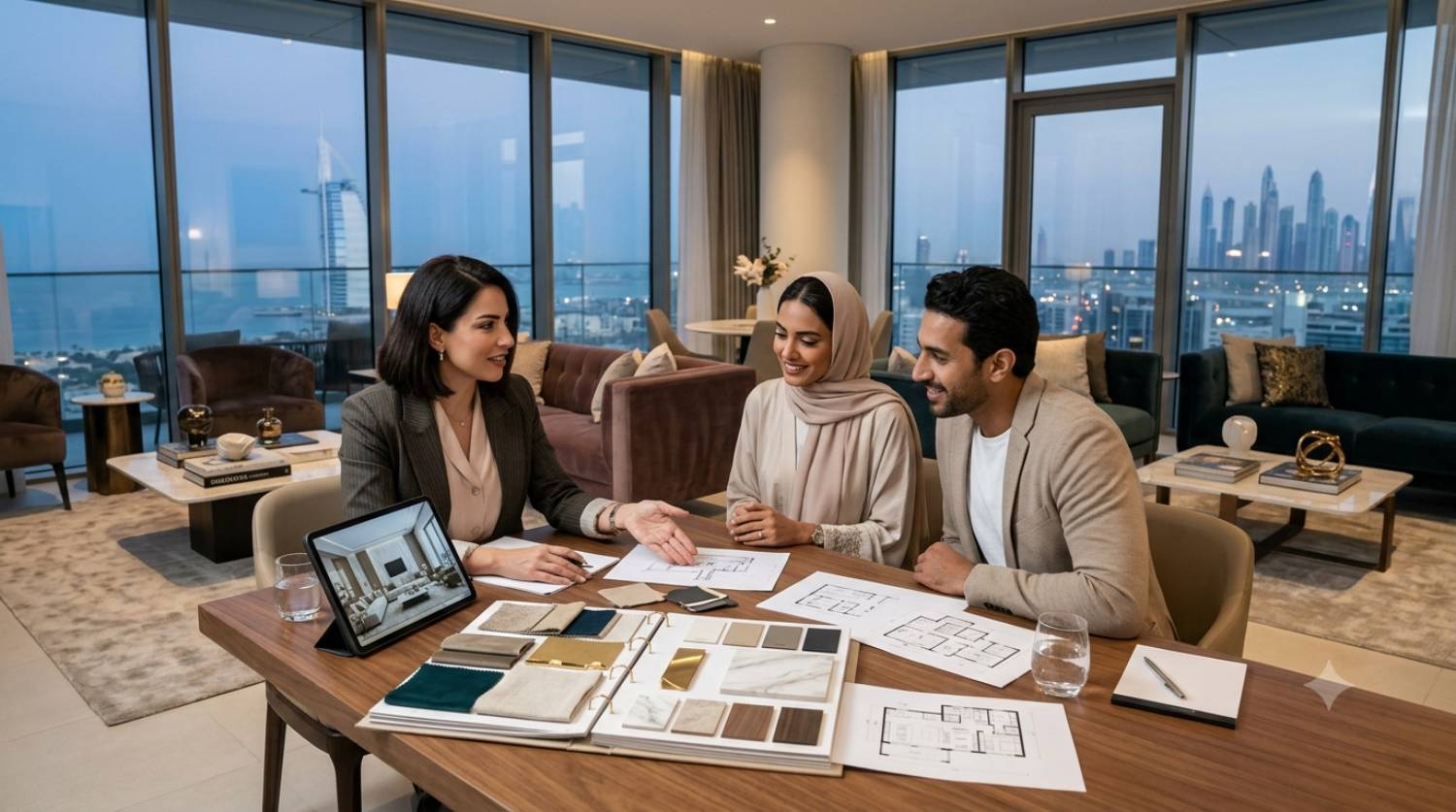
Hiring professional interior designers involves several important steps, from discussing your ideas and budget to reviewing design concepts and managing installation. Understanding the process helps you make informed decisions, control expenses and create a functional, attractive space that meets your needs.
Designing or renovating a property in Dubai requires careful planning, particularly when balancing appearance, functionality and budget. Whether you are updating an apartment, renovating a villa or preparing a commercial space, professional interior designers can help organise the project and turn your requirements into a practical design.
Hiring an interior design company in Dubai generally involves an initial consultation, design development, material selection and project coordination. Understanding these stages before signing an agreement allows you to communicate expectations clearly and recognise which services are included.
Initial Consultation and Understanding Your Requirements
The process usually begins with a consultation to discuss your property, design preferences and available budget. Designers may ask about your lifestyle, how different rooms will be used and any existing features you want to retain.
For residential properties, discussions often cover storage, furniture arrangements, lighting and family requirements. Commercial projects may require additional consideration of customer movement, employee comfort and business identity.
Providing photographs, floor plans and preferred design references can make these conversations more productive. Be clear about your priorities and identify which improvements are essential rather than optional.
Developing the Interior Design Concept
After understanding your requirements, the design team begins developing a concept. This stage establishes the overall appearance, layout and atmosphere of the property.
Designers may prepare mood boards, colour palettes, furniture layouts and three-dimensional visualisations. These materials help you understand how the proposed interior could look before physical work begins.
You should review room dimensions, circulation space, storage solutions and lighting positions carefully. Attractive designs must also support everyday activities without making rooms uncomfortable or difficult to maintain.
Request revisions before approving the final concept. Changes made during planning are generally easier to accommodate than alterations requested after construction or installation has started.
Understanding the Scope of Services
Interior design companies do not all offer identical services. Some concentrate on concepts and technical drawings, while others provide complete design-and-fit-out solutions.
A design-only agreement may leave you responsible for appointing contractors, purchasing materials and supervising installation. A full-service arrangement may include procurement, construction coordination, furnishing and final handover.
Before proceeding, confirm the following:
- Design deliverables: Establish whether floor plans, technical drawings and visualisations are included.
- Material procurement: Ask who orders finishes, furniture and fittings.
- Project supervision: Confirm whether the designer will oversee contractors and site progress.
- Approval responsibilities: Identify who handles necessary building or developer permissions.
- Payment arrangements: Request a written schedule showing fees, deposits and payment stages.
- Handover requirements: Clarify how defects, incomplete work and final inspections will be managed.
A detailed written agreement helps prevent disagreements about responsibilities and additional charges.
Budget Planning and Material Selection
Discuss your budget early, as materials and construction requirements directly affect project costs. Designers can help you choose flooring, furniture and finishes based on durability, appearance and maintenance.
Dubai’s heat, humidity and strong sunlight should also influence material choices. Request an itemised estimate covering design fees, materials and labour, and keep a contingency budget for unexpected expenses.
Some interior renovations in Dubai require approval from building management, developers or relevant authorities, particularly when modifying electrical systems, plumbing or structural elements.
Your designer or contractor should clarify the necessary permissions and responsibilities before work begins. Once construction starts, maintain regular communication, review progress and ensure technical alterations are handled by qualified professionals.
Managing Timelines and Unexpected Changes
Project duration depends on property size, design complexity, approvals, material availability and construction requirements.
Custom furniture and specialist finishes may require additional ordering or manufacturing time. Delayed approvals or unexpected site conditions can also affect the schedule.
Request a realistic programme identifying major milestones and expected completion stages. Any substantial changes should be documented with their potential cost and timing implications.
Avoid approving additional work without understanding how it affects the agreed budget.
Final Inspection and Project Handover
Before accepting the completed project, arrange a walkthrough with the designer or project manager.
Inspect paintwork, flooring, fitted furniture, lighting and other completed installations. Record visible defects or unfinished items in a snagging list so responsibilities and correction dates are clear.
Check that relevant warranties, maintenance information and operating instructions are provided where applicable.
A thorough handover helps ensure the space is practical, safe and ready for its intended use.
FAQs
Q.1 How much does hiring an interior designer in Dubai cost?
Ans: Costs depend on property size, design complexity and service scope. Some designers charge fixed fees, while others use area-based or percentage-based pricing. Request detailed quotations before comparing providers.
Q.2 How long does an interior design project usually take?
Ans: Timelines vary according to approvals, material availability and construction requirements. Minor decorative projects may take considerably less time than complete property renovations.
Q.3 Can an interior designer manage the entire renovation?
Ans: Some companies offer comprehensive design-and-fit-out services, including contractor coordination and installation supervision. Others provide design consultancy only, so confirm responsibilities before signing.
Q.4 Are building approvals necessary for interior renovation in Dubai?
Ans: Certain alterations may require building management, developer or authority approval. Requirements depend on the property and proposed work, particularly where structural or building services changes are involved.
Q.5 What should I check before hiring an interior design company?
Ans: Review completed projects, relevant experience, service inclusions, payment terms and contract conditions. Confirm who will manage your project and how
changes or disputes will be handled.
Final Thoughts
Hiring an interior design company in Dubai involves more than choosing colours and furniture. Careful consultation, practical design planning, transparent budgeting and effective project coordination all contribute to a smoother renovation experience. Understanding the process also helps you recognise potential delays and avoid unclear contractual arrangements.
Before committing, compare companies based on relevant experience, communication, documented services and project management responsibilities. Establish your budget, review design proposals carefully and ensure important decisions are recorded in writing. These steps provide a stronger foundation for an interior that meets your practical needs and design preferences.